From Cooling To Heating, Planned Preventative HVAC Maintenance Is Vital
Estimated reading time 11 minutes
It’s that time of year again when the warm summer months slowly but surely change into the cold of winter. Given that the UK has just been through four heatwaves with temperatures reaching 34.7°C (94.5°F) the change that your HVAC needs to make from cooling to heating can take its toll on the system putting it under extra strain.
It’s all too easy to believe that your heating, ventilation and air conditioning (HVAC) system will continue to work as you expect, however overlooking the need to ensure your HVAC is properly inspected and maintained can mean that it will fail just when you need it the most.
As temperatures drop there’s nothing worse than finding that your HVAC is malfunctioning or having issues when it comes to keeping your building warm. It’s therefore important to make sure you have HVAC maintenance in place to ensure your system continues to operate efficiently and effectively throughout the year, providing the heating you’ll need through the next five to six months.
HVAC Maintenance – More Than Just Being Comfortable
Making sure your HVAC is serviced regularly means that you can depend on it to keep you cool when the outside temperature is high and to warm you up when the temperature outside drops. A well-maintained HVAC can overcome a number of issues and comes with many benefits.
Energy Efficiency
Where an HVAV isn’t performing efficiently it will be using more energy. Underperformance can be caused by a variety of problems including clogged filters, dirty condenser coils, leaky ductwork, blocked vents or even a malfunctioning thermostat which in turn will cause your HVAC to have to work harder to achieve the temperature that has been set. An inefficient HVAC system uses more energy leaving you with higher energy costs and a larger energy bill.
By having an HVAC maintenance plan in place, you can ensure that your system is working as efficiently and effectively as it can as all components will be performing as they should and to their specifications. When a system is working efficiently it will only use the amount of electricity it requires to do its job, lowering your energy costs.
Longer Lifespan
As with any complex electrical equipment how well it is looked after and maintained will determine how long it will last. A typical air conditioning system will last around seven to ten years without maintenance. After around ten years your HVAC is likely to start to experience an increasing number of issues ranging from small to large and simple or complicated fixes. It’s also possible that one component may fail and go onto affect other components creating a potential cascading effect of problems.
When an HVAC system is under a planned preventative maintenance contract issues are likely to be detected in advance especially if maintenance is scheduled regularly. By stopping component failures or by diagnosing potential issues early and resolving them you will extend the lifespan of your HVAC system to around 15 years.
Equipment Repair Costs Reduced
Replacing HVAC parts can be costly. If left it’s possible that one failing part may impact other perfectly good parts causing multiple failures resulting in an even more expensive repair bill.
By keeping on top of HVAC maintenance any issues are far more likely to be detected, and preventative action taken to stop component and system failures thereby reducing costly equipment repairs.
Protecting Business Critical Equipment
Business critical equipment needs a 24/7 temperature, humidity and power-controlled environment. Any companies running a server room for their computers will tell you they need a room temperature of around 18–27°C (64-80°F) and a relative humidity of 40–60% to ensure equipment efficiency and prevent damage.
When there are fluctuations in temperature and humidity it can lead to problems including the damage of internal components. High temperatures can cause equipment to overheat and shut down. Cold can affect some equipment from running efficiently, especially any piece of equipment with a battery. Batteries rely on chemical reactions to work, and cold temperatures can slow or stop those reactions. Low humidity (<40%) can lead to static discharge, while high humidity (>60%) can cause condensation, electrical shorts and corrosion.
An HVAC system can maintain a fixed temperature and control humidity levels which will protect sensitive hardware, extend the lifespan of components, keep equipment working efficiently, and ensure reliable operation.
Protecting Your Building
In any building where there is no HVAC system and humidity is not controlled, condensation can build up providing the ideal environment for mould and mildew growth. High humidity can also directly degrade building materials. Where mould and mildew are present it can lead to the breakdown of wallpaper, plaster, wood and textiles causing them to rot which in turn can lead to the compromise of the structural integrity of the building materials, staining and musty odours. Low humidity can cause wood to shrink.
If temperatures drop during cold weather, and there’s no control over the indoor temperature, there’s also a risk of frozen pipes and flooding.
With a fully functioning, efficient HVAC system you know that your system is maintaining the indoor temperature and humidity, ensuring that there is no damage to the fabric of the building.
Health and Wellbeing
Temperature
High temperatures can have a detrimental effect on health. When the temperature is too high it can result in overheating which can lead to fainting, nausea, dehydration, dizziness, confusion, muscle cramps, headaches, breathing difficulties, tiredness, heat exhaustion and heart attacks. When the temperature goes over 40°C the result can be heatstroke, organ failure and death as the body starts to work harder to reduce the core temperature pushing the internal organs to and beyond their limits.
Cold also impacts human health. During cold temperatures the body must work to keep its internal core temperature at or around 37.5°C. When we start to get cold there is an increased risk of increased blood pressure as the body tries to conserve body heat by narrowing the blood vessels in the skin and extremities. According to NICE, the National Institute for Health and Care Excellence winter weather has a direct effect on cardiovascular problems like heart attacks and strokes as cold can also lead to increased levels of a protein crucial for blood clotting called fibrinogen which makes the blood thicker and more viscous.
There is also an increased risk of respiratory infections such as the flu and pneumonia during cold weather and conditions like asthma and arthritis can be exacerbated.
Public Health England's 2014 Cold Weather Plan notes, “Indoor temperatures of 12°C or less can cause a constriction in the blood vessels, resulting in a rise in blood pressure. Thickening of the blood further increases the risk of clots. If these clots form in the heart and brain vessels, they can lead to heart attack and stroke. Exposure to cold indoor temperatures suppresses the immune system; diminishes the lungs’ capacity to fight off infection; and increases constriction of the airways which stimulates mucus production. These factors are associated with an increased risk of bronchitis and pneumonia.”
As well as physical health mental health can be impacted by cold weather. The Institute of Health Equality Director, Sir Michael Marmot says “adults that experience prolonged cold temperatures at home double their risk of developing new mental health conditions, while the risk of exacerbating existing mental health issues triples. Meanwhile, an alarming 1 in 4 (28%) children that live in cold homes are at risk of multiple mental health symptoms, such as anxiety and depression. Physical discomfort from the cold, financial stress, social isolation and loneliness are all thought to contribute to declining mental health.“
Humidity
As well as temperature an HVAC also allows you to control humidity.
Where there is no HVAC or where an HVAC is not working correctly humidity levels can rise and there is the potential of damp leading to mould and mildew growth. If condensation is allowed to build, as warm air meets cold walls or windows, it can provide the perfect environment for mould or mildew to grow. Mould thrives in damp and humid indoor spaces.
Some forms of mould and mildew (e.g. black mould, otherwise known as Stachybotrys chartarum) can release toxins harmful to health leading to health issues including red eyes, skin rashes, runny noses and exacerbating respiratory problems like asthma. Where humidity is controlled, it makes buildings less hospitable to allergens such as mildew and mould. This also results in removing odours that can accompany mould and mildew.
Air Quality
HVACs also play an important role in building air quality and keeping the air clean within a building. Air conditioners filter the air they take in. As an HVAC draws the air into the system, it passes it through air filters and removes a variety of allergens including dust, dirt, pollen, mould spores, germs, chemicals and volatile compounds and smoke. As these allergens are removed from the air the air becomes cleaner. By “cleaning” the air an HVAC can alleviate and prevent many health issues.
Frontier Allergy Asthma and Immunology state that “Air conditioners can be a game-changer for people with asthma. They cool the air, lower humidity, and filter out allergens like pollen or dust”, with the proviso that they need to be properly maintained.
MD, founder and medical director of Allergy and Asthma Care of New York and author of The New Allergy Solution Clifford Bassett explains that “If you’re someone who has indoor allergies, having A/C could actually help filter out some of the pollen, mould, and pollution that are in the air, which could make your symptoms more tolerable”.
Without an HVAC system people often open windows which can allow dust, dirt, pollen and other allergens to find their way into your office or building.
William J Fisk, leader of Lawrence Berkeley National Laboratory’s Indoor Environment Group says: “AC also enables windows to be maintained closed and AC systems usually contain filters that remove particles from the circulated air. With AC and closed windows, indoor concentrations of outdoor air pollutants such as particles, ozone and allergens are decreased.” In one of Fisk’s papers “How IEQ Affects Health, Productivity” found there were potential annual health benefits and annual savings and productivity gains to be made through reducing allergens and respiratory illness through improved indoor environmental quality (IEQ).
Productivity
Workplace temperature can also impact staff productivity. There have been numerous studies which have looked at how office productivity is influenced by temperature.
A study carried out by Helsinki University of Technology and the Lawrence Berkeley National Laboratory states that “… performance increases with temperature up to 21-22°C (69.8 to 71.6°F). The highest productivity is at a temperature of around 22°C (71.6°F).”
The University of Bath’s paper “The Impact of Temperature and Relative Humidity on Productivity" of 56 participants who undertook a range of cognitive tests found that “productivity [was] not affected significantly within the range - 17°C to 25°C in UK climate. When subject to temperatures outside the thermal comfort range (i.e. 15°C and 27°C, a productivity loss was observed. Cognitive functions and, more specifically, productivity in different cognitive tasks are found to be different in different hygrothermal conditions.”
The Office For National Statistics (ONS) have developed an experimental method to estimate the potential scale of lost output from hot days. According to this model the UK lost an estimated total of £28.6 billion (in 2022 prices) over the 24-year period 1998 to 2021 with an average estimated annual gross value added (GVA) loss of £1.2 billion “assuming some level of adaptation.”
Peace of Mind
When your HVAC is running smoothly without problems it’s one less concern for your business. With planned preventative maintenance in the hands of expert’s, help is always at hand to resolve any problems and prevent breakdowns and regular maintenance by qualified HVAC specialists brings with it a multitude of benefits.
Synecore – Experts In Heating, Ventilation and Air Conditioning
Synecore is an expert in HVAC design, installation and maintenance in Kent, London, Surrey, Sussex, Essex. We are at the forefront of technological changes in the HVAC industry. We combine our technical expertise with the latest in HVAC technology to meet all your heating, ventilation, and air conditioning needs. Our design and fabrication service allows us to deliver sustainable HVAC design and installation solutions which match your floorplan, energy targets and specific business needs.
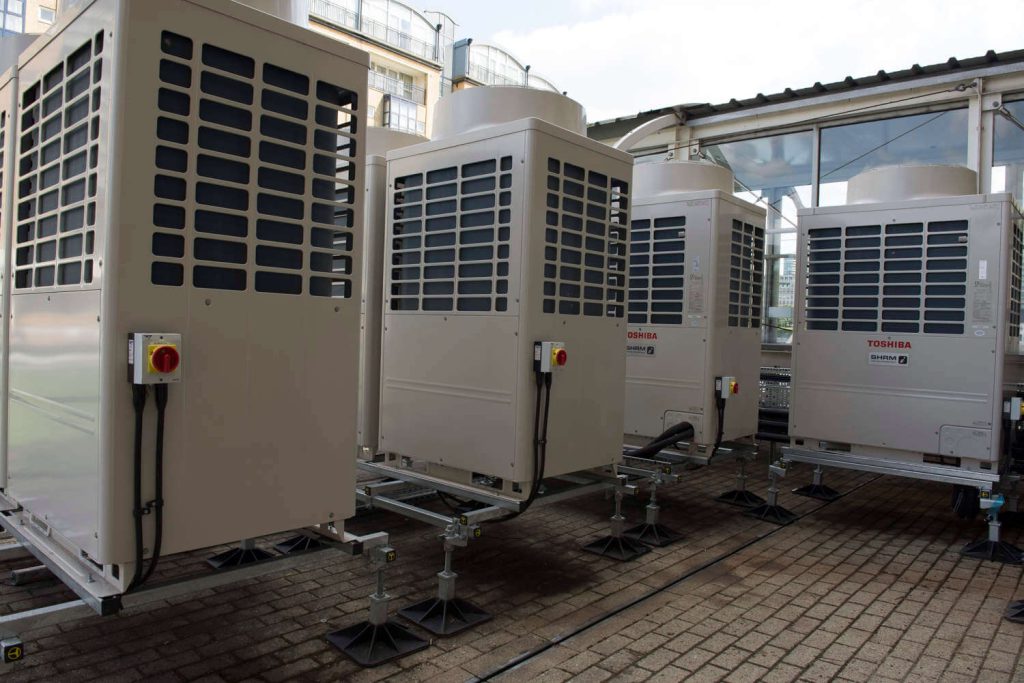
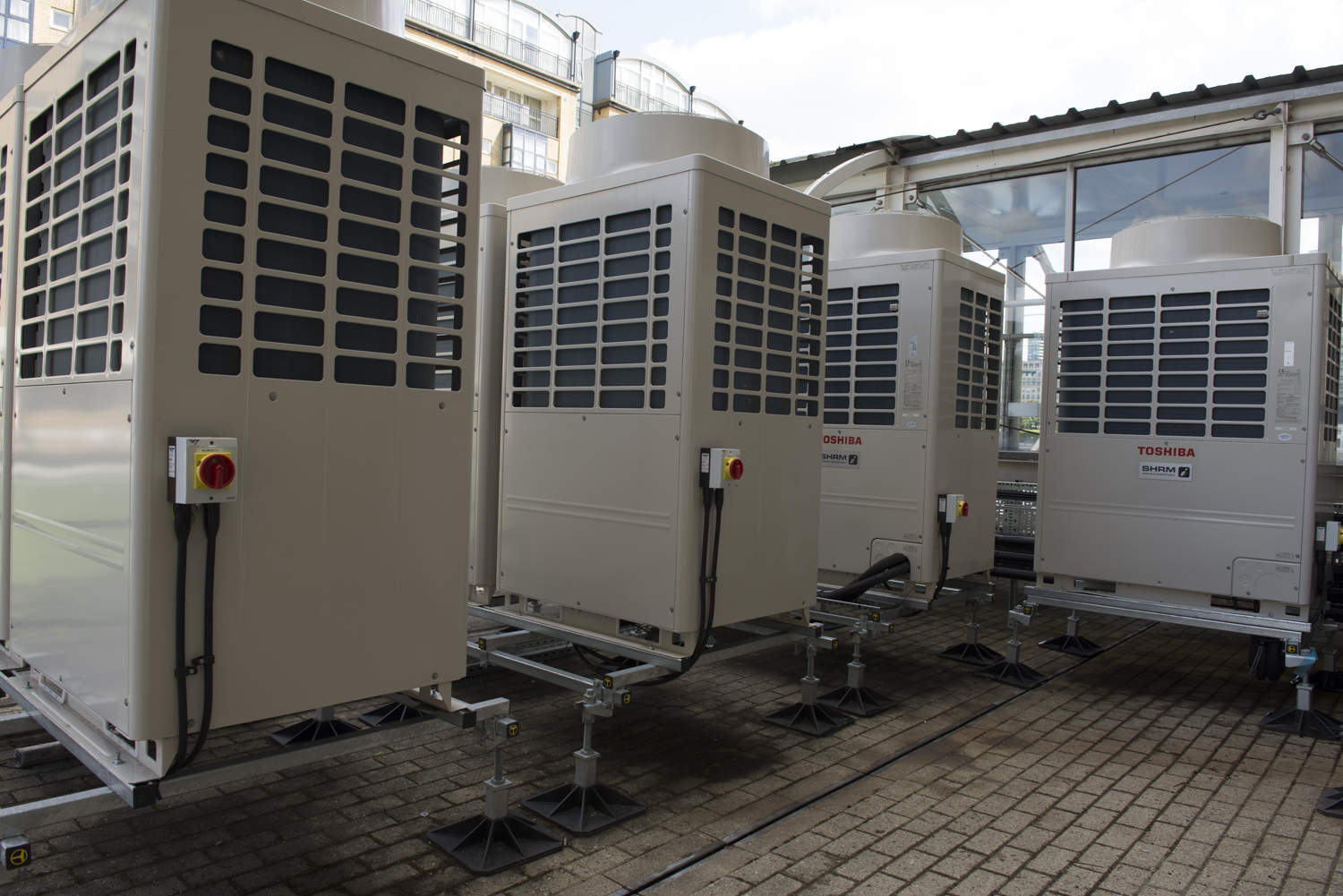
We are an approved supplier and installation expert for air conditioning brands, Mitsubishi Electric, Toshiba, and Daikin. These brands are the disruptors in developing clean and efficient cooling and heating solutions for commercial and residential properties.
We offer Planned Preventative Maintenance on commercial HVAC systems. New installations benefit from extended warranty periods when maintained by Synecore.
If you are looking to install a new air conditioning installation contact our team or call on 01795 509 509. We’ll talk you through your options and provide you with expert advice on the right system for you.