The UK Needs To Plan For More Active Cooling, It Needs Air Conditioning
Estimated reading time 10 minutes
A recent report by the Climate Change Committee (CCC), recognises that the UK is built for a climate that is fast disappearing as global temperatures increase and it needs to plan for more active cooling, such as air conditioning. The report states that the UK is “experiencing serious impacts now, and further impacts are inevitable. By the middle of the century, the UK’s climate will be much more extreme than today. Hotter heatwaves could see 92% of existing homes overheat, creating dangerous conditions for vulnerable people.”
Climate Change
The Paris Agreement, a legally binding international treaty on climate change came about due to the acknowledgement that the world’s climate was changing, and air surface temperatures were steadily increasing. It was implemented by 195 parties (the EU and 194 individual nations) at the UN Climate Change Conference (COP21) in Paris, on the 12 December 2015 and entered into force on 4 November 2016. The Paris Agreement goal was to cut the greenhouse gas emissions which cause global warming thereby holding “the increase in the global average temperature to well below 2°C above pre-industrial levels” (the 1850–1900 period is used to represent the "pre-industrial" era and serves as a zero-point baseline) and pursue efforts “to limit the temperature increase to 1.5°C above pre-industrial levels.”
The UN Intergovernmental Panel on Climate Change (IPCC) has warned that crossing the 1.5°C limit will significantly increase the risk of extreme heat. Going beyond the 2°C temperature ceiling would drastically increase the likelihood of extreme heatwaves, along with other irreversible environmental changes such as a growing flood risk, rising drought and wildfire risk, farming viability, food insecurity, and risks to nature.
According to the World Resources Institute a 1.5°C rise in global temperatures would subject 14% of the global population to severe heatwaves every five years, a 2°C rise increases this exposure to over a third of the population (37%) leading to a substantial increase in heat-related illnesses and fatalities.
The 1.5°C threshold is widely considered a critical, boundary that we can’t go beyond if we are to avoid the most disastrous, irreversible impacts of climate-driven extremes.
The Copernicus Climate Change Service states that the global temperatures over recent years have hovered around 1.47°C to 1.52°C above pre-industrial levels. However, the 1.5°C threshold applies to a 20- to 30-year average of warming, not a single year’s temperature records. So, although some recent individual months or years have already surpassed 1.5°C above pre-industrial levels, the long-term average has not yet breached this limit.
The Effect of Increasing UK Temperatures
The CCC point out that the impact of climate change and increasing temperature are “increasingly visible in the UK.” The report highlights that in 2022 a record breaking, unprecedented temperature of 40°C, “caused the early deaths of over 3,000 people in England and Wales” and there was a 500% spike in calls to 999 which put a great deal of pressure on emergency services and their ability to respond.
The report maintains that recent record hot summers like those of 2018, 2022 or 2025 will become the new normal and heatwaves that last at least a week will be common. In southern England, heatwaves could regularly exceed 40°C, and the hottest heatwaves could be several degrees hotter than the heatwave record set in 2022. Heatwaves hotter than 45°C could also be possible.
The CCC go onto say that “Human-caused climate change has made exceeding 40°C in the UK today at least 20 times more likely than it would have been in the 1960s.”
Temperature Records Continue To Be Broken In 2026
The UK has already experienced the warmest June on record in England in 2026 with a mean temperature, averaged from day and night temperatures, reaching 17.1°C, nearly 3°C above average. The highest daily temperature was recorded at 37.7°C on Friday 26 June 2026 at Lingwood, Norfolk; beating the previous high of 35.6°C which was set in 1957 and during the 1976 heatwave. The UK also saw the Met Office issue a rare red extreme heat warning for parts of England and Wales which remained in force in some parts of the UK for 3 days.
Temperature records continue to be broken in July as the third heatwave of the year gets underway. An amber heat-health alert has been issued by the UK Health Security Agency for the Midlands, eastern and southern England from 8 - 12 July with temperatures predicted to exceed 30°C for up to 10 consecutive days. The heat is forecast to intensify with temperatures of up to 34°C in some areas.
Climate Change Act
The UK Climate Change Act mandates that the UK government must assess UK climate risks every 5 years. It’s the CCC’s statutory responsibility to provide independent advice on what these risks will be. For the first time the CCC have put forward potential solutions to address the risks it has identified.
The UK Must Prepare For Weather Extremes
The CCC report states that while the priority must be to keep global warning below “2°C above preindustrial levels”, the world isn’t on track to keep to this goal. As a consequence, at a minimum, the UK should prepare for weather extremes, “if global warming levels reach 2°C above preindustrial levels by 2050.” The report goes onto say that reaching 4°C above preindustrial levels by the end of the century, cannot be ruled out and therefore the UK should consider these potential temperature levels as part of “effective adaptation planning.”
Climate Risks Are Intensifying
The priority risks of a UK climate, at or around 2°C by 2050, are outlined in the CCC report. The “three key hazards that drive fundamental challenges to the functioning of the UK” are identified as intensifying heat, a growing flood risk and rising drought. Increasing extreme temperatures in the forms of heatwaves are the biggest risk to health in the UK. Annually, heatwaves cause around 1,400-3,000 heat-related deaths each year. By 2050 this could increase to 3,800-10,000 deaths per year. If left unmanaged, the CCC say that climate hazards that are already threatening health, lives, livelihoods, and nature will rise further.
Although climate risks are intensifying, it’s not too late to change the climate trajectory and the damages that climate change would bring are not inevitable. The CCC say they “know what needs to be done to start preparing for a 2°C level of global warming by 2050. Cooling to protect from heat, increased flood preparedness, and improved water management are the highest priorities.”
Effective Adaptation Planning To Combat Increasing Temperatures
The CCC say that risks can be substantially reduced with “proven and cost-effective adaptation measures are available for immediate deployment. Deploying these adaptations at scale will be critical to protecting lives and help avoid loss of life – particularly amongst those most vulnerable to climate impacts – and unnecessary damage and disruption to people and to the economy.”
The report sets out the priority adaptations and recommendations that government should take to mitigate climate risks.
One of the priorities is the protection from heat. The CCC have set a target, that by 2050 “excess heat-related mortality should be no greater, and ideally lower, than today’s annual average.” To achieve this would require cooling. This is especially important in “people’s homes, care homes, and hospitals, where those particularly vulnerable to heat are most likely to be.”
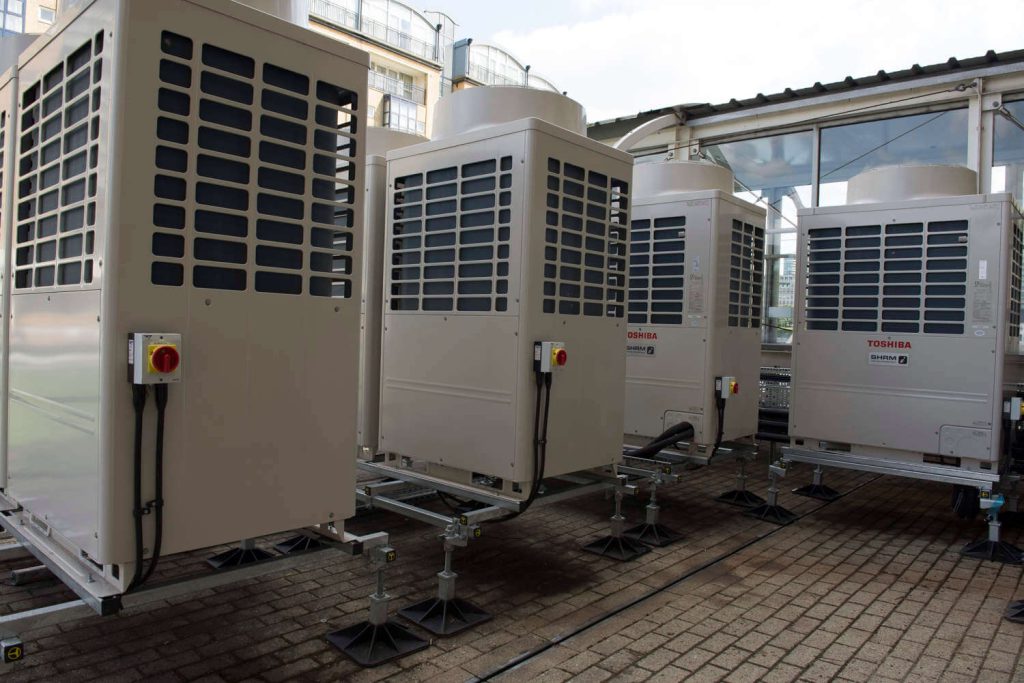
The CCC also state that new builds should be designed with cooling in mind, to keep people cool from the outset. They go onto say that in some parts of the country passive cooling measures may be sufficient to maintain a cool environment however with the likely intensity and duration of heatwaves that are predicted for the future there needs to be a plan for more active cooling (such as air conditioning). The report points out that active cooling, alongside other passive cooling measures will be needed for retrofitting existing homes, which will make up most of the homes in 2050, and that it will be impossible or too expensive for some homes to rely only on “passive measures to keep temperature to safe levels.” They also state that creating just one cool room in a house, in the 30% most vulnerable urban households, through active cooling could prevent significant “national-level increases in heat-related mortality.”
The CCC explain that households and businesses should install cooling to ensure the comfort of occupants in the face of increasing temperatures and this could be managed alongside the transition to low carbon electricity systems such as heat pumps.
CCC Recommendations For Government
The CCC have put forward the following recommendations to the UK government to drive forward adaptation in the next two years:
- Investment in cooling for key public services such as hospitals, schools, prisons, and care homes. Passive measures should be used, especially in new builds but where there is greater risk active cooling alongside passive measures should be implemented, and aligned with low-carbon heating systems, to fully manage risk.
- A set maximum temperature should be set for workplaces. Currently the UK has no law for minimum (just guidelines/a suggestion) or maximum working temperatures for workplaces, but the law states employers must keep indoor temperatures "reasonable". Having a maximum working temperature would reduce the risk that high temperatures pose to workers’ safety and encourage businesses to implement cooling where required.
- Create public cool spaces where people can go to escape the heat. These spaces could use existing public infrastructure to provide vital relief from the heat.
- The uptake of cooling solutions for the most vulnerable should be accelerated by building on “existing incentive schemes” that reach vulnerable groups, including supporting heat pumps which can provide cooling and heating.
These adaptations, alongside the implementation of cooling in the healthcare system could potentially prevent around 40% of heat-related deaths in 2050.
The CCC has estimated that an investment of around £11 billion per year, which equates to between £7–£22 billion in 2025 prices, would be needed from the public and private sectors for passive and active cooling (35% of total investment); flood risk management (21%) and water storage, efficiency, and demand-side measures (11%).
It’s important to note that climate change is already costing the UK around £60 billion a year as a result of declining productivity during extreme heatwaves, crop losses and infrastructure damage from flooding. Without adaptation the cost of climate change could rise to around 1–5% of GDP per year by 2050 at an estimated cost of £60–£260 billion per year, undermining The UK’s economy, prosperity, and health.
It’s therefore vital that households, businesses, and government take urgent action to implement the necessary adaptations to combat the environmental changes that are coming with climate change.
Expert Air Conditioning and Heat Pump Advice and Support
Synecore is an air conditioning, heating, ventilation and air conditioning (HVAC) and heat pump installation expert in Kent, London, Surrey, Sussex, Essex. We provide installation of high-quality products from leading manufacturers. We offer the best solutions for your home and businesses air conditioning, HVAC, and heat pump installation. There are many affordable options available, helping you keep your energy bills down, while having a positive impact on the environment.
It’s worth noting that Synecore offers both design and installation, both of which are critical to the effectiveness of your new cooling and heating system, but not all contractors have the in-house facilities to offer both. At Synecore, we have the means to offer a turnkey design and installation service.
We are an approved supplier and installation expert for Mitsubishi Electric, Toshiba, and Daikin who are the disruptors in developing clean and efficient cooling and heating solutions for residential and commercial properties.
We also offer our customers value and long-term warranties on all installations for complete peace of mind.
Synecore’s air conditioning experts will complete a survey of your home or business to determine the current space and discuss your specific needs. To book a free home air conditioning installation survey, please speak to our team on 01795 509 509 or via our contact form.