International Conference On the Role of Refrigeration in Adapting to Rising Ambient Temperatures (Adaptation 2025)
Estimated reading time 10 minutes
The inaugural international conference on the Role of Refrigeration in Adapting to Rising Ambient Temperatures (Adaptation 2025), organised by the Institute of Refrigeration (IOR) in partnership with the International Institute of Refrigeration (IIR), recently took place at the University of Manchester in the UK, over three days.
The event was attended by around 120 international experts including engineers, researchers, manufacturers, refrigeration professionals, academics and policymakers from 18 countries.
As a “first of its kind”, the conference theme included looking at the risks of higher global temperatures and how to mitigate them; understanding how a hotter climate impacts buildings and supply chains, as well as focussing on the need to develop solutions for Refrigeration, Air Conditioning and Heat Pumps (RACHP) to ensure they remain effective and sustainable in order to cope with the increased demands for cooling in a world climate where temperatures continue to rise and over-heating is becoming a significant risk.
The UK’s Changing Climate
It’s clear that UK temperatures are rising, alongside global temperatures and the need to mitigate the rise in temperature is as much a concern to the UK as it is to other countries.
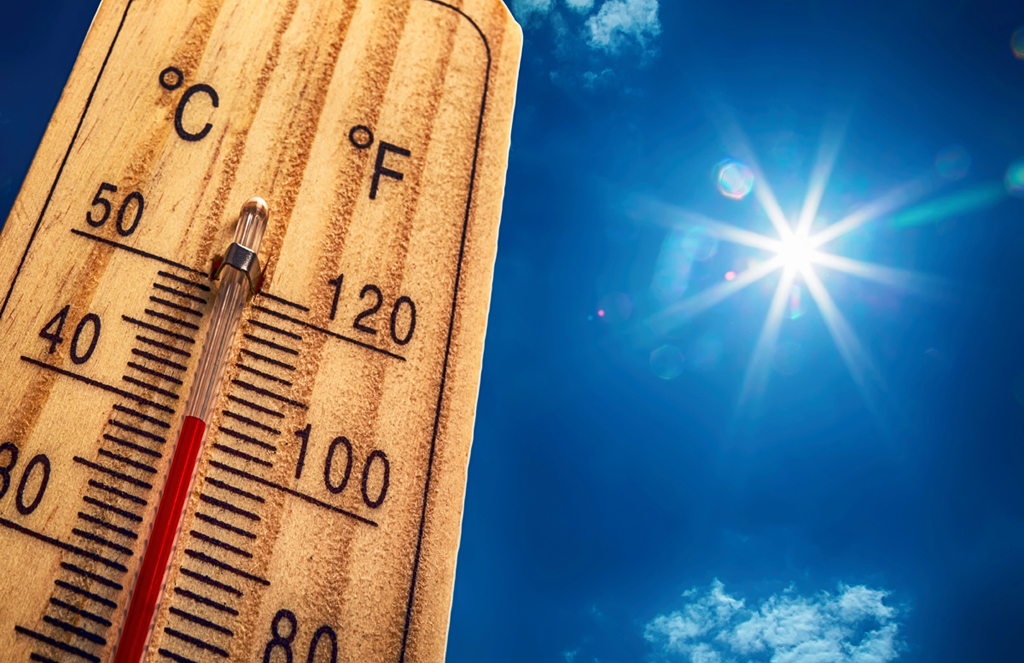
Throughout the years the UK has had a moderate maritime climate, defined by its closeness to the sea, which has resulted in year-round mild temperatures. However, climate change is impacting the UK, causing warming across the whole of the UK. Records show that since 2002 the UK's ten warmest years on record have occurred and heatwaves like the one in 2018, are now 30 times more likely to happen due to climate change. In 2025 there were four heatwaves when temperatures on three consecutive days surpassed 25–28°C.
With the on-going changes to the climate the Met Office says that temperature extremes are now becoming the UK climate norm. They predict that UK winters will be warmer and wetter on average and summers will become hotter and are more likely to be drier. By 2050, heatwaves are expected to happen every other year. By 2070 they predict that winter will be between 1 and 4.5°C warmer and up to 30% wetter and summer will be between 1 and 6°C warmer and up to 60% drier.
This is backed up by other research and articles including the “State of the UK Climate” report which is published each year and shows that baselines are shifting and records are being broken more frequently than before.
Mike Kendon, Met Office Climate Scientist and Lead Author of the State of the UK Climate report says “Every year that goes by is another upward step on the warming trajectory our climate is on. Observations show that our climate in the UK is now notably different to what it was just a few decades ago. We are now seeing records being broken very frequently as we see temperature and rainfall extremes being the most affected by our changing climate. This pace of change and clustering of consecutive records is not a natural variation in our climate. Numerous studies have shown how human emissions of greenhouse gasses are warming the atmosphere and changing the weather we experience on the ground. Our climate in the UK is now different to what it was just a few decades ago, this is clear from our observations.”
A study by a global team of climate scientists from the World Weather Attribution group was highlighted in an Imperial College London article “Climate change made UK heatwave more intense and at least 10 times more likely” found that heatwaves were 10x more likely due to human-made climate change.
A UK Government’s Postnote “Public health impacts of heat”, which “summarises the effects of heat on public health [and] describes risk factors that make some people more likely to experience health impacts, outlines current policies and stakeholder perspectives” also recognises that the UK climate is changing leading to an “increase in frequency, duration and magnitude of extreme heat events, including heatwaves. [Five heat periods of extreme heat were recorded in England in 2022, and temperatures exceeded 40°C for the first time]. UK climate observations show a rise in annual mean and peak temperatures, with maximum temperatures rising at a faster pace than mean temperatures.” The report goes onto say that “Heat and heatwaves pose a threat to public health. In summer 2022, an estimated 2,985 deaths were associated with the five heat periods in England. Without further adaptation to heat, this number is projected to increase further.”
The Conference
Fifty technical presentation sessions were scheduled during the Role of Refrigeration in Adapting to Rising Ambient Temperatures (Adaptation 2025) conference including Smart solutions for extreme weather events, Meeting the increased demand for cooling and lower carbon emissions, Net zero approaches and solutions, Global cold chain vulnerabilities and risks, Building resilient cold chains, Management of heat in buildings and processes, Transport refrigeration and rental equipment and Code of practice – designing systems for rising ambient temperatures.
The conference also featured a number of workshops, training sessions, tours and a student’s networking session which paired students with experts to look at careers in the refrigeration sector and to provide mentoring opportunities.
The overarching theme of the conference was in managing risk and building resilience, natural refrigerants, energy efficiency, technological innovations and smart solutions with the aim of encouraging the exchange of ideas with a view to developing sustainable solutions to deal with global rising temperatures and to reinforce the understanding that refrigeration is critical to human and the planet’s health and wellbeing.
Keynote addresses given by Dr Tim Fox, Dr Pete Falloon and Dr. Ruth Wood on Becoming Critical - Cooling as critical infrastructure, What climate change means for the UK food system and Adapting homes to heat, What rising temperatures mean for cities living respectively are outlined below.
Becoming Critical - Cooling As Critical Infrastructure
Dr Tim Fox from the Clean Cooling Network, a globally integrated programme to make cooling and cold-chain critical national infrastructure, working with the University of Birmingham and Heriot Watt University gave a presentation based on the paper “The Hot Reality: Living in a +50°C World, Cooling as critical infrastructure to survive and thrive”.
Dr Fox stated that with rising ambient temperatures, projections of over 3°C of warming by the end of the century and the increasing frequency and severity of heatwaves, cooling must be seen as Critical National Infrastructure (CNI) to ensure economic stability and national security given its essential role in food security, healthcare and across numerous industries. Dr Fox explained that despite cooling being vital both now and, in the future, cooling infrastructure is not widely recognised today as CNI as “current model of policymaking for cooling sits within governance frameworks at the level of individual, sector focussed, functional departments. In this arrangement, a holistic, whole systems approach to cooling is not enabled and the considerable environmental, social and economic benefits of thinking thermally cannot be achieved.”
Calling on governments to change policy to embed cooling into adaptation planning to ensure it became a vital service and part of CNI, Dr Fox explained that without the recognition that cooling is critical infrastructure there is the risk to “food and nutritional security, health, thermal comfort, productivity, prosperity, and economic well-being.”
What Climate Change Means For The UK Food System
The UK’s Met Office Science lead on food security and Climate Service for Defra on Food, Farming and Natural Environment (which provides scientific advice to Defra in support of climate resilience and adaptation in the agri-food system), Dr Pete Falloon, spoke about what the impact of changing weather and climate shocks and stresses meant for the UK food system and explored the risks and opportunities facing the UK food system as ambient temperatures continue to rise.
Dr Fallon drew on his expertise in climate modelling, agri-environmental and weather and climate data to outline how climate change and temperature extremes threaten the UK food system from farm to fork. Using climate change projections Dr Fallon emphasised how data driven adaptation planning was essential for planning and building resilience within the UK food system.
Adapting Homes To Heat, What Rising Temperatures Mean For Cities Living
Dr Ruth Wood a senior lecturer in Environment and Climate Change from Manchester University and a research fellow with the Tyndall Centre for Climate Change Research gave a keynote address focussing on what rising temperatures and the increasing numbers of heatwaves mean for UK city living, sharing her expertise and underscoring the importance of urban planning, policy alignment and sustainable housing in addressing overheating risks.
Highlighting the vulnerabilities and the barriers to effective adaptation of current UK housing stock to increasing temperatures Dr Wood explained how UK homes aren’t built to handle these changes in temperature. UK homes were designed with thick walls, insulation and large windows to retain warmth during the winter months. As a consequence, they trap heat which results in over-heating issues.
Dr Wood called on the retrofitting of homes to incorporate passive (using shading (external blinds, shutters, or awnings) and ventilation) and mechanical (air conditioning and heat pumps) cooling solutions to be adapted to meet the needs of different building types.
Conference Key Takeaways
The conference brought together RACHP international industry experts from across various different disciplines to share knowledge and to discuss the impact of rising ambient temperatures across the globe and to highlight how these temperature increases are already affecting cooling and cold-chain infrastructure, the UK food system and the UK housing stock (as well as commercial buildings) causing performance and reliability issues and increasing operating costs, resulting in a call for recognition that cooling is critical infrastructure.
The conference allowed attendees to discuss the need for new, smarter solutions and to explore next practical steps. It was agreed that although the different sectors of RACHP face the challenges outlined above, the overall message was there was a need for solutions that provided “resilience, efficiency and low carbon operation…across the board” and that adaptation planning would be vital moving forward.
Synecore – Experts In Refrigeration, HVAC Systems and Heat Pumps
Synecore are experts in refrigeration, HVAC, air conditioning systems and heat pumps.
Synecore designs, installs, and maintains commercial refrigeration for the food, hospitality, retail and leisure industry throughout the UK. We are at the forefront of technological changes in the HVAC industry. We can also provide expert heat pump installation for both homes and commercial buildings in Kent, London, Essex, Surrey and Sussex. We combine our technical expertise with the latest in RACHP technology to meet all your refrigeration, heating, ventilation, and air conditioning and heat pump needs. Our design and fabrication service allows us to deliver sustainable design and installation solutions which match your floorplan, energy targets, and specific business needs.
We are an approved supplier and installation expert for brands, Mitsubishi Electric, Toshiba, and Daikin. These brands are the disruptors in developing clean and efficient cooling and heating solutions for commercial and residential properties.
We also offer Planned Preventative Maintenance (PPM) which ensures you are F-Gas (a legal obligation for any business that operates an air conditioning system with a CO2 equivalent charge of 5 tonnes or more) and TM44 (an energy efficiency assessment of a buildings air conditioning system with a rated output of 12kW or more) compliant. Removing any uncertainty in the management of your system and giving you complete peace of mind.
New installations benefit from extended warranty periods when maintained by Synecore.
If you are looking to install a new air conditioning installation contact our team or call on 01795 509 509. We’ll talk you through your options and provide you with expert advice on the right system for you.