Crack Down On Air Conditioning CISBE Technical Memorandum 44 (TM44) Compliance
Estimated reading time 10 minutes
CIBSE TM44 inspections are a legal requirement in the UK for buildings that have an air conditioning system with an effective rated output of more than 12kW (this includes systems consisting of individual units which are less than 12kW, but whose combined effective rated output is more than 12kW) under the Energy Performance of Buildings (England and Wales) Regulations 2012, as amended in 2020 (the EPB regulations). Inspections must be conducted every 5 years by an energy assessor and recorded on the NDEPC register to make sure the air conditioning system is safe and energy efficient.
For additional clarity the Department for Communities and Local Government “Improving the energy efficiency of our buildings” guide provides definitions for a system:
A system as “a combination of all components required to provide a form of air treatment in which the temperature is controlled, or can be lowered, and includes systems which combine such air treatment with the control of ventilation, humidity and air cleanliness.” They go onto say that “this includes both fixed self-contained systems, such as split systems and centralized systems. Mechanical ventilation systems that provide no mechanical cooling themselves but serve spaces that are cooled by other means are included. Any components contained in air conditioning systems that are only intended to provide heating are excluded. Air conditioning systems that provide refrigeration for process applications, such as server rooms, would also require an inspection if that part of the system allows an inspection to be carried out” and as “one that is considered to be one or more air conditioning units within a building controlled by a single person for the purposes of the regulations.”
Currently if you do not get your air-conditioning inspected every 5 years, you will be fined £300. Further penalty charges of £200 can be issued for failure to comply with a request for a TM44 report within 7 days of the initial request.
With the UK government’s push towards net-zero targets ensuring air conditioning systems are energy efficient is seen as part of a package of reducing business energy consumption and carbon emissions. With this in mind the UK government are looking to crack down on what is seen as widespread TM44 non-compliance through increased fines. Current fines are seen as “weak” which is causing a compliance issue. The UK government is proposing increasing fines to £800 per offence with an additional weekly fine of £200 imposed until a CISBE TM44 inspection is carried out and a valid report is obtained. With this increase in penalties the cost implication for businesses who fail to carry out this legal requirement could very quickly become a considerable amount of money.
Who is Responsible For Ensuring A CISBE TM44 Inspection Is Carried Out?
The responsibility for ensuring a CISBE TM44 inspection is done is the person who “controls the technical functioning of the system, not someone who does no more than adjust the temperature or whose only responsibility is to adjust the controls.” The Department for Communities and Local Government guide to “Improving the energy efficiency of our buildings” further explains that “The owner of the system will usually control the operation of the system even where day to day operation is contracted out to another person or organisation. Where a tenant takes total responsibility for a building and its services (e.g. full repairing and insuring lease), then the tenant will control the system. Where the operation and management of the system is carried out on a day-to-day facilities management basis, or a servicing company provides routine servicing and maintenance, the contract may specify the facilities management or servicing company as the controller of the system with responsibility for ensuring that inspections are carried out. Depending on the terms of such a contract the facilities management or servicing company may accordingly become responsible under the regulations also. Even in such cases, however, the landlord or tenant retains a parallel duty to ensure the air conditioning inspection has been done.”
The person who controls the air conditioning system must:
- ensure an inspection has been done in accordance with the requirements and timetable of the regulations.
- keep the most recent inspection report provided by an energy assessor.
- give any inspection report to any person taking over responsibilities with respect to the control of the air conditioning system.
Where the control of an air conditioning system is passed onto someone else and the current inspection report is not made available the air conditioning system must be inspected within three months of the new operator of the system taking over control.
Who Can Carry Out A CISBE TM44 Inspection?
CISBE TM44 inspections can only be carried out by an energy assessor who is accredited by a recognised certification scheme. They cannot be carried out by building owners or managers. Only air conditioning inspection reports which have been produced and lodged on the register by accredited energy assessors are valid reports.
UK government approved accreditation schemes are responsible for the management of energy assessors. They are also responsible for quality assuring air conditioning inspection reports produced by their energy assessors.
To become a member of an accreditation, scheme an energy assessor needs to:
- demonstrate their competence, either by having a recognised qualification from an awarding body, or approved prior experience and learning equivalent, to the national occupational standard requirements.
- maintain appropriate professional indemnity cover.
- update their skills and knowledge regularly.
- participate in the accreditation schemes’ quality assurance procedures.
- abide by accreditation scheme advice and guidance.
What Access Is Required?
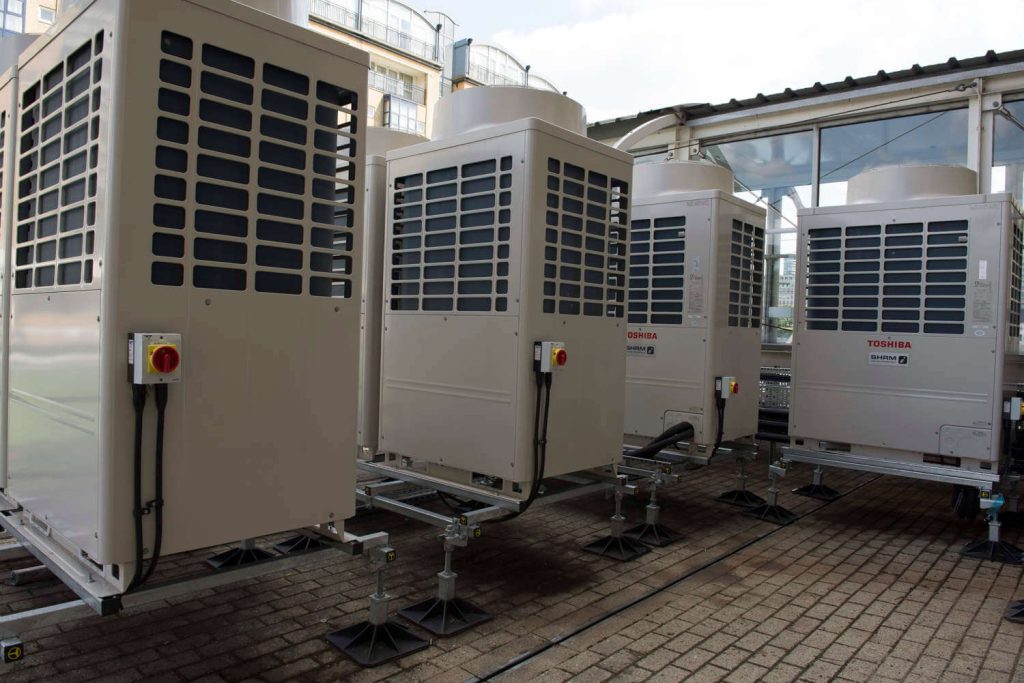
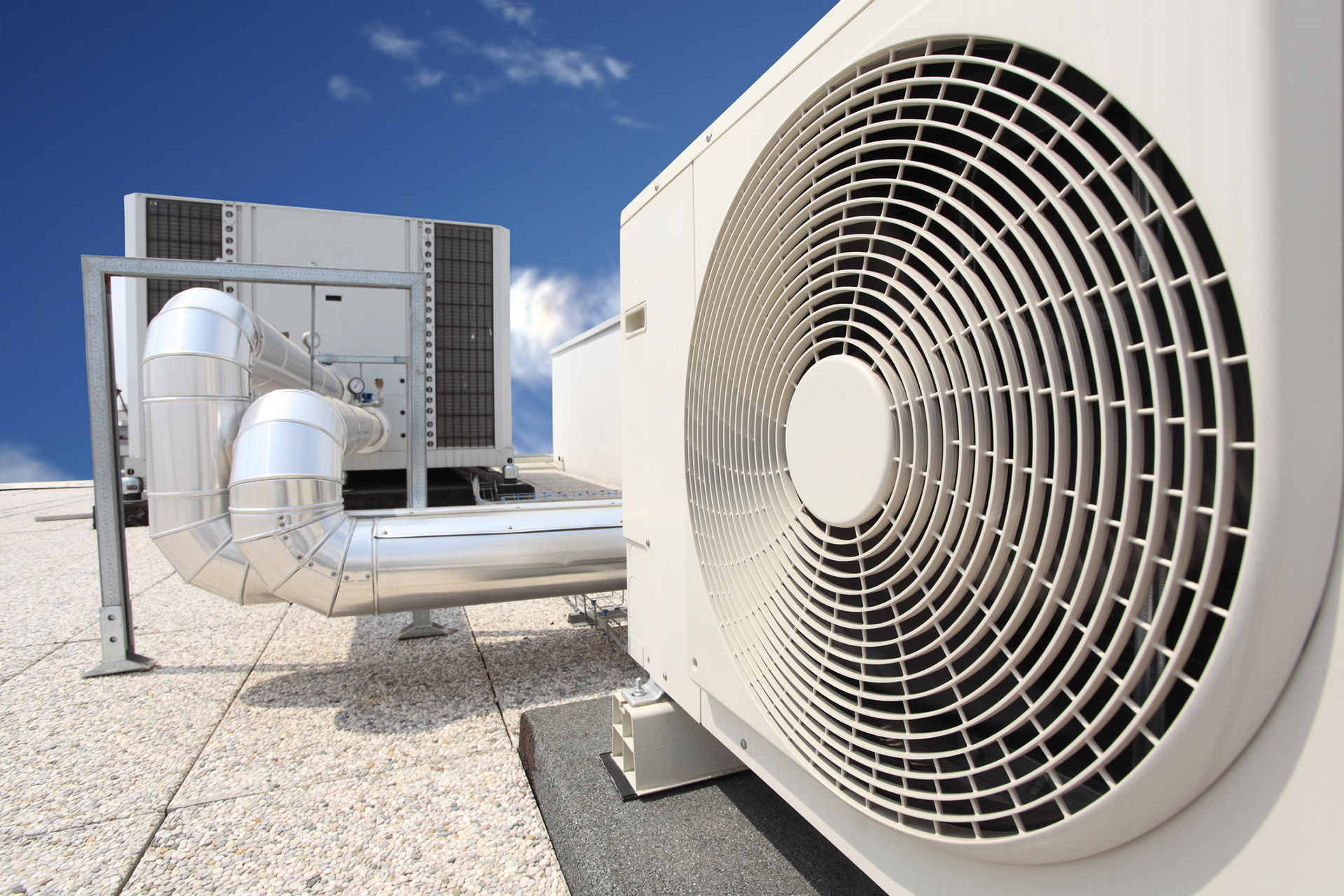
Full access is required to all air conditioning equipment within a system including equipment in plant rooms and on rooftops. Additional access to the inside of the system will also be required. The air conditioning system will need to be turned off to allow safe access. Arrangements should be made for when this work can be carried out to minimise business disruption or downtime.
In all cases the building owner or manager must ensure safe access for the energy assessor. The energy assessor may need to be accompanied by the responsible building manager or person who controls the air conditioning system.
What Does A CISBE TM44 Inspection Cover?
The inspection will examine the following:
- refrigeration and air-moving equipment that are part of the air conditioning system and its controls.
- documentation to understand the system and the extent to which the system has been maintained.
- whether the system is suitably sized for the cooling loads in the treated spaces and to provide advice on ways in which the performance of the system might be improved.
What’s Not Covered?
The building owner or person who controls the air conditioning system should not expect the inspection to identify where there are hazards or where aspects of the installation are unsafe. They should also not expect the energy assessor to fix any problem identified as part of the inspection.
What Information Will The Report Provide?
The CISBE TM44 air conditioning inspection report will provide information on the efficiency of the air conditioning systems, together with some initial advice on how energy efficiency or effectiveness of the system might be improved, including ways to save energy and carbon and to reduce operating costs.
Three levels of energy efficiency are usually found when systems are assessed. These are:
- systems where inefficiencies are present and are due to faults, neglect or misuse.
- systems where efficiency is lower than the accepted minimum due to design or use and
- systems that are efficient.
The inspection report will be produced by the assessor and will typically include the following information:
- the likely efficiency of the air conditioning system including best practice improvement advice to raise standards even where systems are fully compliant with the current minimum provisions of building regulations or standards and any suggestions for improvement.
- any faults identified during the inspection and advice or suggestions for improvement on how to rectify faults in the system that are compromising its efficiency.
- the adequacy of equipment maintenance and any advice or suggestions for improvement.
- the adequacy of the installed controls and control settings and improvement advice to bring the system to a standard of efficiency consistent with the current minimum provisions of building regulations or standards.
- the current size of the installed system in relation to the cooling load and any advice or suggestions for improvement.
- consideration of the capabilities of the system to optimise its performance under typical operating conditions.
- a summary of the findings and the key recommendations.
Where an older air conditioning system is in use and the refrigerant is being phased out, is banned or where its use and supply is restricted, under regulations which aim to phase out ozone depleting substances, advice may be given on what other options are available regarding replacing the system with a new air conditioning system.
Once received, the TM44 report should be kept in a safe place and used to inform subsequent inspections.
Air Conditioning Maintenance
A CISBE TM44 inspection is just one of the legal requirements in maintaining an air conditioning system.
Ensuring an air conditioning system meets F-gas regulations is another legal obligation for all owners of air conditioning who operate stationary air-conditioning which contain F-gas, with a CO2 equivalent charge of 5 tonnes or above. As part of F-gas compliancy, systems must be serviced, maintained and leak tested and a record of maintenance and servicing kept of the equipment you operate or service for 5 years.
How often an air conditioning system is checked depends on the CO2 equivalent charge weight of the system:
- 5-50 tonnes and above – at least every 12 months.
- 50-500 tonnes and above – at least every 6 months.
- 500 tonnes and above – at least every 3 months.
If you install a system which allows automatic detection of F-gas leaks, you can double the period of time allowed between leak checks. If your equipment contains an F-gas equivalent of 500 tonnes or more of carbon dioxide then you must fit a leak detection system.
Planned Preventative Maintenance
Carrying out preventative maintenance of your air conditioning system can ensure it performs throughout the year, keeping your building space at a comfortable set temperature. Without regular maintenance your air conditioning system can develop faults, parts can breakdown which in turn can affect other working parts which may end up leading to a catastrophic failure of the system and subsequent breakdown and loss of air conditioning.
Synecore offers a commercial air conditioning Planned Preventative Maintenance (PPM) service, (including both CISBE TM44 and F-gas regulation compliance) from inspecting the system to look for any issues; to checking the control panel, thermostat settings and sensors, electrical connections and ductwork to changing the filters and cleaning the condenser and evaporator coils to looking for leaks, lubricating moving parts and fully testing the system.
All PPM packages are tailor made for your business and are dependent on the size of the premises and the AC installed. As part of the PPM air conditioning package Synecore schedules site visits throughout the year to keep your air conditioning system performing at peak efficiency. The PPM package ensures your equipment is back up and running as soon as possible. Our customers receive high priority status for any air conditioning breakdowns and repairs, with an engineer onsite within hours of the fault being reported.
Synecore
Syncore is an expert in air conditioning design and installation for your home and business. We are an approved supplier and installation expert for air conditioning brands, Mitsubishi Electric, Toshiba, and Daikin. These brands are the disruptors in developing clean and efficient cooling and heating solutions for commercial and residential properties.
If you are looking to install a new air conditioning installation contact our team or call on 01795 509 509. We’ll talk you through your options and provide you with expert advice on the right system for you.